


Consulting (咨询)
Taiji Meditation (TM) is for everyone. We may offer a variety of FREE consulting services for every level and style. Please feel free to email us for inquiries at mindlync@gmail.com.
太极冥想(TM)适合所有人。我们提供各种免费咨询服务,涵盖不同水平与风格。如有垂询,欢迎发送电子邮件至 mindlync@gmail.com 。
The key elements of practicing Taiji Meditation:
-
Keep the mind calm, simple, and focused.
-
Keep the body relaxed, natural, and comfortable.
-
Think of the Dantian (丹田) lightly and frequently.
-
Initiate the Taiji movements from the mind in advance.
-
Keep the Taiji movements steady, gentle, and rounded.
-
Sink the internal energy flow "Qi" into the Dantian at the end.
-
Avoid winds, rains, noises, and other disruptions.
练习太极冥想的要领:
-
保持心境宁静、纯粹且专注。
-
保持身体放松、自然且舒适。
-
意念轻柔而频繁地关注丹田。
-
动作由意念先行引导。
-
保持动作平稳、柔和且圆活连贯。
-
收势时将内气沉入丹田。
-
避免风雨、噪音及其他干扰。
The Meditation is the foundation for Taiji. Without solid foundation in Meditation to build substantial consciousness and internal energy, the movements of Taiji will not produce desired effects. The eight fundamental techniques of Taiji Meditation: Light, Loose, Soft, Slow, Still, Rising, Expanding, Empty.
冥想是太极的基石。若无扎实的冥想功底以积淀充实的意识与内劲,太极动作便无法产生预期的成效。太极冥想的八个关键技术: 轻, 松, 软, 慢, 静, 升, 扩, 空。
太极养生基础功
TM Foundational Practices
站桩
Zhan Zhuang (Standing Meditation)
站桩, 是中国传统武术特有的一项基础训练, 作为一种以静调内的功夫, 它对一些慢性病以及疑难杂症方面可能有着奇特和显著的疗效。最常用的站桩要求: 两脚与肩同宽, 颈椎上领, 尾椎下坠, 脚尖平齐, 两臂曲抱于胸前, 掌心呈圆, 目视前方, 调身, 调息, 调心。整个功架状态为虚领顶劲, 内抱外撑, 沉肩坠肘, 涵胸拨背, 松腰敛臀, 心静体松。心静, 则指一念代万念, 比如用轻轻的专注于数呼吸来驱散各种杂念, 通过调息来达到调心的目的。
特定的站桩姿势决定了上身体态的放松, 经过简单的调息, 自然就气沉丹田, 迫使内脏浊气下沉, 体内开始通畅。随着不断地修炼, 循序渐进, 血液运行和经络不断得到强化, 迫使人体穴位打开, 吸收氧气并转化为能量来补充人体的需要, 即气化运动。随之足三阴足三阳被激活, 渐渐便达到了中医所讲的活血化淤滞的效果, 脏器的疾病就会不断的得到修复和痊愈, 养生健身的玄机便在其中。
-
站桩养气血: 因为血管、气脉、神经遍布周身, 只有肌肉放松了, 气血才能更加通畅。
-
站桩活筋骨: 站桩当站到气血旺盛时, 全身的筋骨都拔开了, 全身大小关节可能会又酸又疼, 甚至可能有时还听得到关节拔开的声音。
-
站桩修复病灶: 站桩时可能明显感觉到哪里有病哪里就不舒服, 等修复好了, 另一个部位又不舒服了, 直至全身都舒服了, 病也就好了。
-
站桩可使大脑中枢神经得到充分的休息: 因为站桩要求心身放松, 大脑放空, 精神放松无压力, 使身心愉悦。善摄生者, 上养神志。
各人因体质病情不同, 在站桩练习过程中会有不同表现。比如有人练习十日左右就能体会益处, 感到轻松愉快; 有的才练几天就会发生肌肉震颤、麻热胀感觉明显等现象, 还有人会出现流泪、腹鸣、蚁行感、酸胀等不适的生理现象。要明白, 这些现象都可能是练功过程中的好转现象, 病愈之后, 自可消失。几乎所有人站桩,肩颈腰背某处都可能会酸疼得难受, 但必须坚持下去, 不拘时间地点, 有时间就站。打通身体的瘀滞也是量变到质变,只有累积到一定的能量才会产生质变。站到不疼了, 便是局部瘀滞在气血的不断冲击下终于疏通了。随着全身气血的通畅, 全身各处的顽疾会自然痊愈。
站桩的实质是养气血, 气血充足了, 新陈代谢加快, 就可以把体内的垃圾渣滓清理代谢出来, 而垃圾正是造成疾病的祸首根源。久而久之, 便应了“气血一通百病不生”的中医论点, 气血通则百病除。在此基础上, “法于阴阳, 和于术数, 食饮有节, 起居有常, 不妄作劳”, 就能尽终其天年!
*Zhan Zhuang* (Standing Pole) is a foundational training method unique to traditional Chinese martial arts. As a practice that cultivates internal balance through stillness, it may yield remarkable therapeutic effects for various chronic conditions and intractable ailments. The most common requirements for the posture are: feet shoulder-width apart with toes aligned; the crown of the head gently lifted upward while the tailbone sinks downward; arms curved and held before the chest with palms forming a rounded shape; and the gaze fixed straight ahead. The practice involves regulating the body, the breath, and the mind. The overall posture embodies the principles of "lifting the crown" (maintaining an upright, suspended head), "internal embracing and external expanding," sinking the shoulders and elbows, hollowing the chest while rounding the back, relaxing the waist and tucking the buttocks, and maintaining a calm mind and relaxed body. A calm mind implies replacing a myriad of wandering thoughts with a single focus—such as gently counting breaths to dispel distractions—thereby using breath regulation to achieve mental stillness.
The specific *Zhan Zhuang* posture promotes relaxation of the upper body. Through simple breath regulation, *Qi* naturally sinks to the *Dantian* (energy center), driving out stagnant air from the internal organs and clearing the body's internal pathways. With consistent, progressive practice, blood circulation and the meridian system are strengthened; acupuncture points open to absorb oxygen and convert it into energy to meet the body's needs—a process known as "Qi-transformation." Consequently, the three *Yin* and three *Yang* meridians of the legs are activated, gradually achieving the Traditional Chinese Medicine effect of invigorating blood circulation and resolving stasis. Internal organs are repaired and healed, revealing the profound secret to health and longevity.
-
*Zhan Zhuang* nourishes *Qi* and blood: Since blood vessels, energy channels, and nerves permeate the entire body, relaxation of the muscles is essential for the smooth flow of *Qi* and blood.
-
*Zhan Zhuang* mobilizes tendons and bones: When the practice generates vigorous *Qi* and blood flow, the body's tendons and bones are stretched and opened; joints throughout the body may feel sore or achy, and one might even hear the sound of joints releasing tension.
-
*Zhan Zhuang* repairs ailments: During practice, one may clearly sense discomfort in specific areas where an ailment exists; as one area heals, discomfort may shift to another, continuing until the entire body feels at ease and the illness is resolved.
-
*Zhan Zhuang* allows the central nervous system to rest fully; the practice requires relaxation of both body and mind, the clearing of thoughts, and a stress-free mental state, fostering a sense of well-being. Those skilled in the art of nurturing life prioritize the cultivation of the spirit and mind.
Individuals may experience different reactions during Zhan Zhuang practice depending on their constitution and health conditions. Some may perceive benefits—such as a sense of ease and happiness—after just ten days, while others might experience muscle tremors or distinct sensations of numbness, heat, and distension within a few days. Some may even encounter uncomfortable physiological phenomena such as tearing, borborygmus (stomach rumbling), sensations of ants crawling on the skin, or soreness and swelling. It is important to understand that these may well be signs of healing during the practice; they will naturally disappear once the underlying condition is resolved. Almost everyone experiences intense soreness or pain in the shoulders, neck, waist, or back at some point; however, one must persevere—practicing whenever time permits, regardless of the specific location. Clearing bodily blockages is a process of moving from quantitative change to qualitative change; a qualitative shift occurs only after sufficient energy has accumulated. When the pain subsides, it indicates that the localized blockage has finally been cleared by the continuous flow of *Qi* and blood. As *Qi* and blood circulate freely throughout the body, chronic ailments in various areas will naturally heal.
The essence of Zhan Zhuang lies in nourishing *Qi* and blood; when *Qi* and blood are abundant, metabolism accelerates, enabling the body to eliminate waste and toxins—the root causes of disease. Over time, this validates the Traditional Chinese Medicine principle that "when *Qi* and blood flow freely, no disease arises"—unimpeded circulation eliminates illness. By building upon this foundation—"modeling oneself after Yin and Yang, harmonizing with the laws of nature, maintaining moderation in diet and drink, adhering to a regular daily routine, and avoiding excessive exertion"—one can live out their full natural lifespan.


静坐
Quiet Sitting (Seated Meditation)
静坐,与站桩一样,也是一种基础训练。静坐形态一般是盘坐和结手印。盘坐分散盘、单盘、双盘。双盘也称双跏趺坐, 可以有两种形态:吉祥坐和金刚坐。对于吉祥坐双盘: 先将左脚掌置于右大腿上, 后再将右脚掌置于左大腿上; 对于金刚坐双盘: 先将右脚掌置于左大腿上, 后再将左脚掌置于右大腿上。对于年长者以及初练者,双盘坐姿可能会造成剧烈难忍的足踝关节疼痛,从而挫伤练功者的积极性, 影响放松入静,有违练功初衷。单盘坐姿也可能造成类似腿脚酸痛。所以练功者不需要勉强执著于任何坐姿,可以采用相对舒适稳固的散盘坐姿即可,将脚掌足踝置于大腿的下方而非上方, 以便于以后能够平缓入静。
静坐结手印也可以有多种形态, 以下是三种最常用的方法:
-
双手自然覆膝 : 双手自然放在大腿或膝盖上,掌心向下或向上即可。
-
禅定印: 双手自然放在小腹前或腿上; 左手放在右手上,两掌向上; 两个拇指的指尖轻轻相触,形成近似椭圆形; 肩膀、手腕和手指都保持放松,不要刻意用力; 双手可以自然靠近腹部,避免悬空造成肩臂紧张。
-
智慧手印: 拇指与食指轻触成圆,其余三指自然伸展,双手分别放在膝盖或大腿上, 如图所示。
调身, 调息, 调心: 身体正直, 眉心舒展, 面带微笑, 全身放松, 下颚微收, 含胸拔背。意念观守在某个部位。一般情况下应从海底轮(尾骨尖平行)守起, 依次是生殖轮(与下丹田平行), 脐轮(与肚脐平行), 心轮(与中丹田平行), 喉轮(与咽喉平行), 眉间轮(与眉毛平行), 顶轮(与前发际平行), 如图所示, 由下至上逐一守开。
静坐的关键要领:身正、体松、息自然、心安住。盘腿要稳; 呼吸自然; 眼睛微闭或自然垂帘; 舌尖轻顶上颚; 心念简单专注轻松; 修炼时间每天20–30分钟左右。
Like *Zhan Zhuang* (standing meditation), seated meditation is a form of foundational training too. It typically involves specific cross-legged postures and hand mudras. Cross-legged postures include the loose cross-legged position (*Sanpan*), the single cross-legged position (*Danpan*), and the double cross-legged position (*Shuangpan*). The double cross-legged position—also known as the full lotus position (*Shuang Jiafu Zuo*)—has two variations: the Auspicious Posture (*Jixiang Zuo*) and the Vajra Posture (*Jingang Zuo*). For the Auspicious Posture, place the left foot on the right thigh first, followed by the right foot on the left thigh; for the Vajra Posture, place the right foot on the left thigh first, followed by the left foot on the right thigh. For older practitioners or beginners, the double cross-legged posture can cause intense, unbearable pain in the ankles, which may dampen enthusiasm, hinder relaxation and the entry into a meditative state, and thus run counter to the original purpose of the practice. The single cross-legged posture may also cause similar soreness in the legs and feet. Therefore, practitioners need not stubbornly insist on any specific posture; a relatively comfortable and stable loose cross-legged position—with the feet and ankles placed below the thighs rather than on top of them—is sufficient to facilitate a smooth entry into a meditative state.
Hand mudras used during seated meditation can also take various forms; the following are the three most common methods:
-
Hands resting naturally on the knees: Place the hands naturally on the thighs or knees, with palms facing either down or up.
-
Dhyana Mudra (Meditation Mudra): Place the hands naturally in front of the lower abdomen or on the legs; rest the left hand on the right hand with both palms facing upward; lightly touch the tips of the thumbs together to form an oval shape; keep the shoulders, wrists, and fingers relaxed without applying deliberate force; the hands may rest close to the abdomen to avoid tension in the shoulders and arms caused by holding them suspended in the air.
-
Jnana Mudra (Wisdom Mudra): Lightly touch the thumb and index finger to form a circle while extending the other three fingers naturally; place the hands on the knees or thighs, as shown in the illustration.
Regulating the body, breath, and mind: Keep the body upright, smooth the area between the eyebrows, maintain a gentle smile, relax the entire body, slightly tuck the chin, and gently hollow the chest while straightening the back. Focus your attention on specific energy centers. Generally, one should begin by focusing on the Root Chakra (aligned with the tip of the coccyx) and proceed upwards in sequence: the Sacral Chakra (aligned with the Lower Dantian), the Navel Chakra (aligned with the navel), the Heart Chakra (aligned with the Middle Dantian), the Throat Chakra (aligned with the throat), the Brow Chakra (aligned with the eyebrows), and the Crown Chakra (aligned with the front hairline), as shown in the diagram.
Key essentials for seated meditation: keep the body upright and relaxed, breathe naturally, and maintain a settled mind. Ensure a stable cross-legged posture; breathe naturally; keep the eyes slightly closed or lowered in a relaxed gaze; lightly touch the roof of the mouth with the tip of the tongue; maintain a simple, focused, and relaxed state of mind; and practice for approximately 20–30 minutes daily.


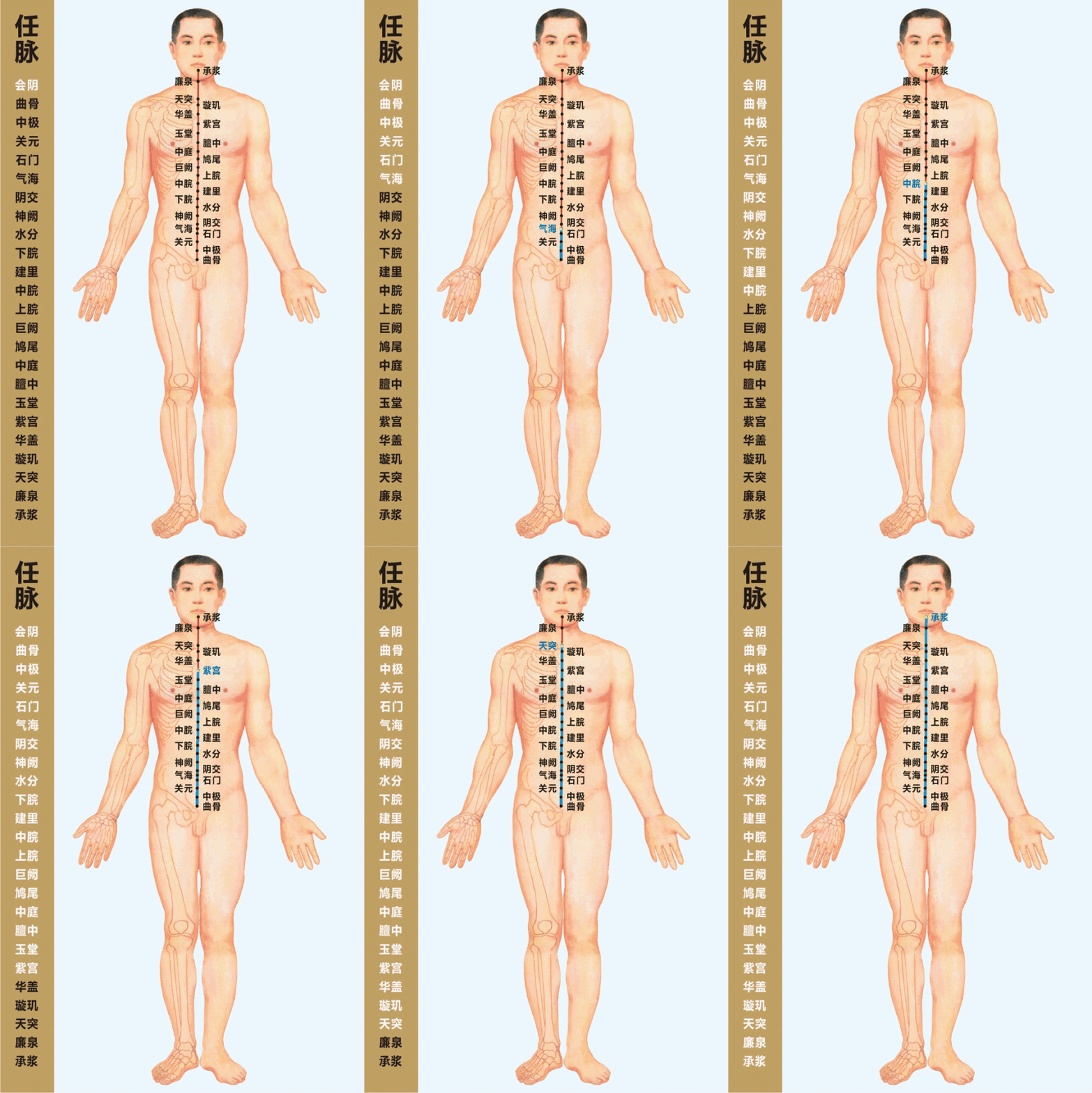
人体的经脉和穴位是中医经络学说的重要组成部分,经脉是气血运行的通道,而穴位是经脉上的重要点。这些经脉和穴位在中医诊治过程中有着重要的作用,通过针灸、按摩等手法对这些穴位进行刺激,可以达到治病保健的效果。
以下是一些主要的经脉及其相关的穴位:
-
手太阴肺经
-
主要穴位:中府、云门、天府、侠白、尺泽、孔最、列缺、经渠、太渊、鱼际、少商。
-
-
手阳明大肠经
-
主要穴位:商阳、二间、三间、合谷、阳溪、偏历、温溜、下廉、上廉、手三里、曲池、肘髎、五里、臂臑、肩髃、巨骨、天鼎、扶突、禾髎、迎香。
-
-
足阳明胃经
-
主要穴位:承泣、四白、巨髎、地仓、大迎、颊车、下关、头维、人迎、水突、气舍、缺盆、气户、库房、屋翳、膺窗、乳中、乳根、不容、承满、梁门、关门、太乙、滑肉门、天枢、外陵、大巨、水道、归来、气冲、髀关、伏兔、阴市、梁丘、犊鼻、足三里、上巨虚、条口、下巨虚、丰隆、解溪、冲阳、陷谷、内庭、厉兑。
-
-
足太阴脾经
-
主要穴位:隐白、大都、太白、公孙、商丘、三阴交、漏谷、地机、阴陵泉、血海、箕门、冲门、府舍、腹结、大横、腹哀、食窦、天溪、胸乡、周荣、大包。
-
-
手少阴心经
-
主要穴位:极泉、青灵、少海、灵道、通里、阴郄、神门、少府、少冲。
-
-
手太阳小肠经
-
主要穴位:少泽、前谷、后溪、腕骨、阳谷、养老、支正、小海、肩贞、臑俞、天宗、秉风、曲垣、肩外俞、肩中俞、天窗、天容、颧髎、听宫。
-
-
足太阳膀胱经
-
主要穴位:睛明、攒竹、眉冲、曲差、五处、承光、通天、络却、玉枕、天柱、大杼、风门、肺俞、厥阴俞、心俞、督俞、膈俞、肝俞、胆俞、脾俞、胃俞、三焦俞、肾俞、气海俞、大肠俞、关元俞、小肠俞、膀胱俞、中膂俞、白环俞、上髎、次髎、中髎、下髎、会阳、承扶、殷门、浮郄、委阳、委中、附分、魄户、膏肓、神堂、譩譆、膈关、魂门、阳纲、意舍、胃仓、肓门、志室、胞肓、秩边、合阳、承筋、承山、飞扬、跗阳、昆仑、仆参、申脉、金门、京骨、束骨、通谷、至阴。
-
-
足少阴肾经
-
主要穴位:涌泉、然谷、太溪、大钟、水泉、照海、复溜、交信、筑宾、阴谷、横骨、大赫、气穴、四满、中注、肓俞、商曲、石关、阴都、腹通谷、幽门、步廊、神封、灵墟、神藏、彧中、俞府。
-
-
手厥阴心包经
-
主要穴位:天池、天泉、曲泽、郄门、间使、内关、大陵、劳宫、中冲。
-
-
手少阳三焦经
-
主要穴位:关冲、液门、中渚、阳池、外关、支沟、会宗、三阳络、四渎、天井、清冷渊、消泺、臑会、肩髎、天髎、天牖、翳风、瘛脉、颅息、角孙、耳门、禾髎、丝竹空。
-
-
足少阳胆经
-
主要穴位:瞳子髎、听会、上关、颔厌、悬颅、悬厘、曲鬓、率谷、天冲、浮白、头窍阴、完骨、本神、阳白、头临泣、目窗、正营、承灵、脑空、风池、肩井、渊腋、辄筋、日月、京门、带脉、五枢、维道、居髎、环跳、风市、中渎、膝阳关、阳陵泉、阳交、外丘、光明、阳辅、悬钟、丘墟、足临泣、地五会、侠溪、足窍阴。
-
-
足厥阴肝经
-
主要穴位:大敦、行间、太冲、中封、蠡沟、中都、膝关、曲泉、阴包、足五里、阴廉、急脉、章门、期门。
-
中医经络学说博大精深。太极养生功并不要求掌握复杂的经脉和穴位知识,而是要求把握系统性原则和了解一些最常见的重要穴位,包括丹田、命门、百会、会阴、涌泉、劳宫、印堂、合谷,等等。比如,站桩静坐等基础功法起于丹田止于丹田。